Friday, April 18, 2014

Frozen and Gender Roles


~Spoiler-free~

This winter, people fell in love with Frozen, Disney’s latest installment in their long-running series of princess movies. This is a list which generally is seen as an exhausted sequence of recycled themes and plots – a flat, lifeless franchise, which only survives by successively re-skinning the same tired narrative. One of the main criticisms of these movies is that characters are often so limited by their gender; many times decaying into rigid personality models which viewers simply feel they’ve seen before. However, Frozen showed the whole world that an old animation studio really can learn new tricks. Disney majorly departed from their classical mold, updating the movie for a savvy modern audience. It does this with groundbreaking visual effects, a masterful soundtrack, and characters that shatter longstanding clichés. Yet, Frozen also appeals to society’s changing perceptions about gender and sexuality. Though the big screen, Disney has created a piece of art which represents contemporary viewpoints concerning the roles of men and women.

One of the most tired clichés in princess movies is the main female protagonist. In Disney’s early days, she was an idealistic feminine paragon, like Snow White or Sleeping Beauty, a petite young woman who falls into trouble and has to be rescued by her prince charming. As time passed, the feminist movement gained momentum and Disney altered their model to fit the ideas of the time. Newer Disney princesses like Bell and Pocahontas are independent, determined, and strong-willed. That way, they fit changing perceptions about womanly behavior. However, this is still an idealistic view of the way women ought to act, which is why audiences quickly tired of this model as well. Frozen is different in that it does not force its female protagonists, Ana and Elsa, to conform to any one model. These two characters are simply people, which means they have unique personalities all their own. For example, Ana is independent, strong-willed, and gregarious, but she is also romantic to a fault and at times can be incredibly awkward. Likewise, Elsa is a respectable, intelligent leader, yet she still struggles with her inner emotions. In a sense, Disney snatched-up its own mold, and then turned it on its head. And the results are fantastic. Both of the main protagonists fundamentally feel like real people, not despite their flaws, but because of them. Disney has shrewdly demonstrated how society is conquering long-held beliefs about woman by opting to treat them like people instead of portraits.

Frozen is also likely the first Disney movie that would definitely pass the Bechdel Test. This test was devised by cartoonist Alison Bechdel in 1985 in order to gauge gender bias in movies. To pass the test, a movie must meet three simple criteria: one–it has more than one woman in it, two–those women talk, and three–at least one of their conversations is about something besides a man. Obviously, it’s not a very difficult test, but it is surprising how many movies fail it. However, Frozen definitely passes. Ana and Elsa talk throughout movie, and although some of their conversations are about men, many are not. Mostly, they talk about their relationship with each other. So, instead of placing emphasis on a woman’s ability to marry and have children, Disney highlights how women can care about others, including their sisters.

In addition to responding to changing expectations of women, Frozen also includes characters that do not fit with traditional manly stereotypes. A great example is Olaf, the snowman who joins Ana on her adventure. Although Olaf is male, he is never afraid to show his emotions. He loves to shower affection onto the people he cares about, and is very sensitive to others’ feelings. Not only that, he also likes to talk about his own physical appearance, much like one would expect a teenage girl to do while shopping – admiring his new nose or looking forward to being tan. Most likely, if Olaf were a human character instead of an anthropomorphized snowman, many people would think he is gay. And who knows, maybe Olaf is cinema’s first LGBT snowman. But that isn’t the point. By making Olaf a snowman, Disney ingeniously legitimized his behavior, making it seem okay or even normal. In this way, Disney’s new movie is in-line with changing present-day perceptions about sexual orientation.

Yet, Frozen does more than break stereotypes with its characters’ personalities. Using their behavior, it also addresses changing gender roles. One example is the idea that men should be the breadwinner of the household and women should be the caretaker. In modern times, this perception has greatly shifted, and Frozen demonstrates this. When Ana leaves on her adventure, her fiancé Hans asks if he should go with, because he doesn’t want her to get hurt. But Ana does not need a man to “protect” her, so she asks Hans to stay home and take care of the kingdom. Although Disney has made this purposefully subtle, it’s still noticeable.

And of course, Frozen is not the first piece of media to tackle gender roles. However, most seem to do it with a classic role reversal, wherein the woman takes on traditional manly traits – like going to work at an office, and the man takes on traditional womanly traits – like staying home to clean. In some ways, this approach does more harm than good, because the challenge to traditional gender roles is seen as humorous or ironic, not serious and acceptable. Therefore, Frozen does it better by resisting this shallow method. It is true that Ana takes on traditional manly traits by embarking on an adventure, by Hans does not suddenly morph into a housewife. Instead, he takes on the role of a leader, managing a government and organizing its people. In a lot of ways, this represents an ideal modern household, where both participants have important fulfilling jobs, and they work together to get by.

There are other times where Frozen challenges gender roles and traditional views about ideal men and women; for example: no one in Arendelle questions the legitimacy of a female head of state. However, the movie does not get it perfect. It still utilizes character models with idealized physiques, giving female characters humongous eyes and slim waists, and giving male characters large builds and huge muscles. However, the thing that makes Frozen refreshing is the fact that the creators never tried to profit from the movie’s modern social values. It was advertised and targeted the same way as any other Disney movie, towards kids, not social reformers. This is great because kids who watch the movie will start to think of these things as normal. And isn’t that the kind of world modern children need to grow-up in, one where overturning gender roles is no longer a struggle, but a given? By the time these children reach adulthood, rigid gender roles could be a thing of the past.

For those of us who want to see gender equality, Frozen can offer a great deal of hope. Culture and movies are intimately connected so that one can hugely influence the other. The fact that Frozen is so popular means that it can start to change opinions, but the popularity also indicates a societal shift. In modern times, we have a new definition of gender, one where men, women, and others can act, think, and love any way they want. Therefore, Frozen is not so much a cause of change; rather, it is a symptom.

It is fun to think that one day Frozen will be viewed by cultural historians studying our time. They’ll talk about how media represents culture. They’ll say this was the time when people were beginning to widely accept other sexual orientations, a time when both men and women could start to hold any occupation they wanted, without having to feel out of place. Probably, some of those scientists will be men, and some women, and some gay, and some strait. And they’ll all work as a team, learning from each other’s strengths and weaknesses, thankful to have grown up in a world where gender perceptions do not get in the way.

Friday, March 14, 2014

The Hidden Themes of Avatar


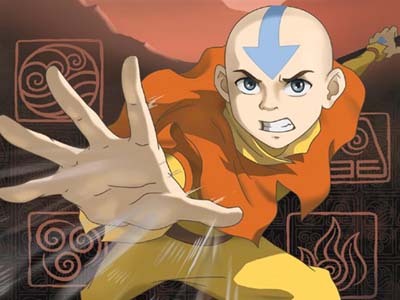
As a kid, my most favorite TV show was Avatar: The Last Airbender. I love the creativity of it – the characters, the world, the conflicts. The very idea of people who could manipulate the four elements (water, air, earth, fire) appealed to my youthful imagination. And at the center of it all is Aang, the upbeat young protagonist with the burden of being master of all four elements as well as the last of the airbenders. However, despite his great responsibility, he always finds some way to be hilarious or ridiculous, impressing everyone with his fun-loving personality. Now that I’m older, though, I realize that Avatar is an incredibly mature show. It delves into dark, sometimes morbid subjects that kids’ shows seldom address. As a child, it was just a fun cartoon for me to watch, but now I realize how influential it was in forming my world view. Kids’ shows never touch serious issues, but The Last Airbender proves that it can be done, and done in such a way as to keep the show entertaining while still touching upon the important points that make viewers stop and think.

Mature themes are pervasive throughout the series, starting in the very first episode. The show begins with Sokka and Katara, a relatable brother and sister pair, out fishing to help feed the water tribe, when they unexpectedly stumble across the lost Avatar Aang, who had been frozen in an iceberg. In their conversations, it’s revealed that Sokka and Katara’s dad is away fighting a war against the fire nation, and their mom has been taken and sold by the fire nation. Later, fire nation prince Zuko visits the water tribe searching for Aang, and he treats the people as less than human, shoving them around, grabbing them, and yelling at them as he demands tribute. On the surface, this is pretty standard stuff— introduce some downtrodden child heroes and establish a main antagonist—but so much more exists beneath the surface. Look closely: in the first two episodes, the show has already included aspects of poverty, war, racism, imperialism, slavery, and human trafficking.

This pattern continues for the whole series. For instance, genocide is addressed when Aang discovers the ruined air temples. Then, sexism is touched-upon when Katara tries to learn to fight, an activity which society considers inappropriate for a girl. The creators masterfully blend these mature nuances throughout the plotline of the entire show. The amazing part is that they do it so subtly at times. The show never tells anyone how to think, or overtly states the moral of the story. Characters simply face situations in which they must make tough moral choices, and viewers are invited to watch the outcomes.

All that being said, the most interesting thing about Avatar: The Last Airbender is the way in which the creators approach the concept of good and evil. It’s so easy to create a show with a well-defined “good” and “bad” side; but in Avatar, this line is intentionally blurred. Characters who are initially heroic can be revealed as immoral, and vice-versa. For example: after the first episode, it’s easy to think of Zuko as the main antagonist. However, it’s quickly revealed that he is a lost soul with a troubled past, who needs to make hard decisions about his future. In this way, Zuko becomes more than a typical villain; instead, he is another main character who people can become emotionally invested in.

The same is true with the four nations. For instance, the creators purposefully cause mental dissonance for people who think of the fire nation as a ubiquitous evil. Some of the kindest characters, like Iroh, come from the fire nation. Then, in season three, when they enter the fire nation, it’s revealed to be much more than just Bowser’s Castle. It’s a nation made up of individuals who are just as human and good-natured as those on the outside. Conversely, the show goes out of its way to reveal unfairness and corruption in the societies of each of the other three nations as well. The Northern Water Tribe turns out to have restrictive gender roles for women. The earth kingdom capital turns out to be a police state headed by a corrupt advisor and a puppet king. Even the air nomads have flawed institutions. This approach is really neat because it never dehumanizes anyone; no group is just an evil target, and no group is a flawless force for good. All factions in this world have character, and they are just as flawed as the people who compose them.

Truthfully, I could go on about this show for a while, but I couldn’t do it justice. I highly recommend watching it, both for parents and kids. It’s a mature show with some really morbid topics, but it isn’t done to be funny, or satirical, or ironic. Everything is simply put out there, and in truth, it proves that kids can handle thinking about such things. Watching Aang struggle with his powers or Zuko trying to redeem himself, makes us consider them more deeply than we would for other TV show characters. Avatar: The Last Airbender achieves something seldom reached in children’s television: it invites us to look past the surface and to really try to understand the characters and powers at work in the world, and by extension, it forces us to examine our own as well.
 

Friday, February 28, 2014

My Weekly Epiphany

The older I get, the more I’m convinced people don’t like to be happy. Seems counter-intuitive, but I guess it makes sense. After all, people love narrative, and happiness is the enemy of good story-telling. There’s a reason fairy tales always have happily-ever-after at the end. You put it at the beginning and you got no story. Imagine that – a story where everything’s just fine all the way through. It just doesn’t feel right to us – too flat, boring. We like action, drama, despair – something to get the blood going. Like it or not, there’s a part of us that enjoys when the protagonist’s mother dies, or when the lead male and female get in a huge fight. These things are the “meat” of the story, and without them, no one cares.

That being said, some of the best stories contain happy moments. Great authors know how to dribble it in – dangling joy in front of the reader like a carrot-on-a-stick. Some stories start with happy and then let it all go wrong. Some are sad or infuriating all the way through, but make sure to sprinkle the subtlest glimmers of hope. So it seems, not only do people loathe happiness, they like to be teased by it – trying to coax it out but it keeps darting back into the brush.

So, are all people secretly masochists? Or is this a modern version of gladiator fights in ancient Rome, in which spectators could revel in the suffering of others? Maybe both? Well, I don’t think so. It’s been well documented that fairy tale happily-ever-after’s are unrealistic. And many have expressed the idea that stories must speak the truth in order to resonate with people. So, since reality isn’t constantly happy, great stories can’t be either? This is definitely part of it, but I think it goes deeper than that. There is something inherently human about being upset. Whether it’s anger, despair, or sadness, people have been feeling it forever. These emotions have always been important to our survival. We feel angry when our friend’s house is robbed and sad when their family member dies. These things are lost if all we can fathom is happiness. I guess essentially, that’s what good stories are – exercises in being human. They let us live the ups and downs along with the characters. Through all their rough situation and awful events, stories can help us to simply be people. So, next time I read a depressing story or hear a few girls gossiping about relationship troubles, I’ll remember about stories, and why people don’t like being happy all the time.

Friday, February 14, 2014

Has This Ever Happened to Anyone Else?

In my life, the following situation occurs all the time, with numerous different people. I think there might be something wrong with me…

Friend: Hi, Evan
Me: Hey, how’s it going?
Friend: Ugh… fine, I guess…
Me: What’s wrong?
Friend: Didn’t you hear what ‘so-and-so’ said today?
Me: Probably…
Friend: Ugh, ‘so-and-so’ really irritates me. They are so annoying.
Me: Um… Well, I definitely don’t agree with what ‘so-and-so’ did, but I think it’s not worth-it to get worked-up over. After all, that’s just who they are. Ignore that one flaw and your left with a pretty decent person in the end.
Friend: I-don’t-know, I just… can’t get over it. Doesn’t it bother you?
Me: I guess not. Being bothered with it seems like so much work.
(Another friend walks up)
Other Friend: Hey guys, what’s up?
Friend: We were just talking about ‘so-and-so’. Did I tell you what they did today?
Other Friend: Ugh, I HATE ‘so-and-so’. What happened?
(After a brief exchange…)
Other Friend: Oh-my-gosh, I can’t believe that…
Friend: I know, and Evan is defending them!
Other Friend: (looks at me) What! Why?
Me: Bu-… Wha-… No, I wasn’t defending them; I just don’t like it when you guys say mean things about them.
Other Friend: But didn’t you hear what they did?
Friend: (taps shoulder of third friend passing by…) Hey, what do you think of ‘so-and-so’?
Third Friend: (stops… glances at all of us… shakes head) ‘So-and-so’ – I can’t stand ‘em.
Friend: See, Evan. You just don’t get it.
Other Friend: (chimes in) Oh-my-gosh, this one time, ‘so-and-so’... (tells story)
Friend: …Oh yeah, that was when we were friends with ‘whatserface’…
Third Friend: …‘whatserface’ – I can’t stand her...
Me: (Quietly resigns from conversation to think about something else…)

Why is it – in a world of famine, disease, drought, and corruption – all we can ever find to complain about is each other?

Tuesday, January 28, 2014

Behind the Success of Minecraft

With almost 14 million copies sold, Minecraft is one of the most-bought PC games ever. This is surprising, because Minecraft didn’t come from a massive, game-publishing magnate like Blizzard or EA; it came from a small, independent Swedish gaming company, Mojang, which to this day has less than 40 employees. It’s doubly surprising because the concept for Minecraft seems so absurdly simple, like playing with Legos – the player breaks blocks and moves them around to build whatever they want. The question is: how did Mojang do it? How did an obscure indie title with 8-bit graphics out-sell Starcraft? Well, as it turns out, Minecraft is a pure marvel of game design. The designers ensured that Minecraft’s game mechanics created a fun user experience that propelled it out of obscurity.

A house built in Minecraft
In many ways, Minecraft’s simplicity is its biggest asset. Game designers always struggle to create an experience that will both have mass appeal and engage players for a long time. To attract a large number of players, designers usually err on the side of simplicity. However, to keep players interested, they often need to do the opposite; err on the side of complexity. This is where the genius of Minecraft comes into play. Each block in Minecraft serves one simple, very specific function.  Yet, when these blocks are cleverly and creatively combined, they can do so much more. With very simple features and little implementation, Minecraft’s developers created a virtually endless amount of complexity. In a lot of ways, this departs from the normal approach to games. Normally, in order to control the experience they are creating, developers want to know everything that is possible for the players to do. Instead, the designers of Minecraft simply added an item, and then watched what the players did with it.
It’s lucky they did. No single person could fathom every single possibility in Minecraft. Players continue to discover new uses for old items. In fact, some people make a living doing just that! The wide range of possibilities means that anyone could find something to do. Artistic people can draw skins, create resource packs, or build models in creative mode. Brainy people can try to invent new contraptions to solve a problem, or put together adventure maps. Or a player can just hang out with friends on a server. There is practically something for everyone. It shows that a simplistic design philosophy can go a long way.
A working guitar
Minecraft’s design genius also shines through in the way it introduces new players. In any game designed to enhance the player’s imagination, the ultimate challenge involves balancing choice with player skill. How many different blocks should the player get? How many different things should they be able to do? Too much choice and a new player will be so overwhelmed that they’ll give up. But too little and experienced players will get bored and quit. This means that the ideal imaginative game has a huge selection and low barrier of entry for new players. As it turns out, Minecraft does this perfectly. At the beginning of a game in survival mode, the player is plopped down in a randomly generated wilderness. They aren’t given any items or told how to do anything. Only a few achievements serve to introduce critical game concepts like crafting and breaking blocks. They can’t even build anything yet! This is the polar opposite of what most creative games do, which is to give the player all the choices right at the beginning.
Normally, giving a new player no goals and no tutorial would frustrate them, because knowing nothing about a game means things will happen that the player wasn’t ready for; like for example – hostile monsters that spawn ten minutes after loading up a new world. However, Minecraft’s creators knew a tutorial wasn’t necessary. All indie games like Minecraft are spread almost entirely by word of mouth. This means the new player probably has a friend with them – showing them the ropes, introducing them to the game in a highly personalized manner. This is further enhanced by multiplayer support fairly early in development. Remember, every block’s behavior is very simple, and it’s easy to understand and describe. Therefore, explaining the game is fun and easy for both the teacher and the student. Minecraft’s designers need only to sit back and let the new player’s friends introduce them to the game. No boring tutorial necessary.
The crafting recipe for a sign
Minecraft’s crafting also ensures that new players never get overwhelmed by possibilities. This crafting system isn’t like in other games. The player isn’t told which items they need or how to put them together. The only way to find a recipe is either to painstakingly guess the 3x3 pattern, or to look it up on the wiki. Essentially, this guarantees that a player is ready for the new information, because they’ve already chosen to learn it. So instead of being overwhelmed by choices, the player is curious about all the possibilities and is encouraged to learn more. Crafting makes survival mode the perfect tutorial for a game like Minecraft, and it’s just that – a tutorial. Most long-time players never enter survival mode without mods, because they’ve seen everything it has to offer. However, all of them started out playing survival mode to learn the basics. Experienced players will also agree, checking the wiki is just part of the game. The developers knew this. Minecraft is played in a window as opposed to directly controlling the graphics card, which slows the game, but makes it easy for a player to tab out and check a webpage.
Multiplayer
However, the wiki is merely the tip of the iceberg – Minecraft’s online community is huge, which hints at the game’s final design achievement – timing. The development of Minecraft coincided almost perfectly with the rise of the internet; specifically, the rise of video sharing sites like YouTube. Because Minecraft is so easy to record, countless You-Tubers built their careers playing it, giving the game free advertising and exposure. Mojang also capitalized on increasing internet use by organizing and sponsoring websites where players can share their creations – mods, skins, adventure maps, resource packs, and new inventions and discoveries. Perhaps the timing was just luck, but Minecraft’s designers were certainly shrewd enough to capitalize on it.
Ultimately, Minecraft’s robust community is a testament to its uniqueness. Its designers achieved something exceptional that normally is only attained by a few select MMOs – they crafted an experience, not just a game. When one thinks only about Minecraft – the game, they miss the true reason people play it. They miss the forums and the wiki – long multiplayer sessions with friends over Skype; Sphax, Shaders Mods, Machinimas, Tekkit and Hexxit – and all the YouTube let’s-players, adventure maps, and secret updates. What makes Minecraft truly special is its massive online presence that always gives players something to do; and of course, it’s all made possible by simple mechanics that bring new players in, and by an ingenious design that allows for virtually endless possibilities.

Logic gates for computers made with blocks in Minecraft - in case you were interested

Friday, January 10, 2014

Transience

By the end of my life, I wonder how much time I’ll have wasted.
 
I wonder how much time I’ll have spent on projects I’ll never finish, and chasing goals I’ll never catch.
 
I wonder how much time I’ll have spent pursuing relationships that never go anywhere or maintaining relationships that will just fall apart in the end.

And I wonder how much time I’ll have spent trying something new and hating it, or doing extra work that I didn’t have to do.
 
It’s impossible to say how much time I’ll waste by the end of my life. I might live to be 100. I might die tomorrow. I wonder how much time I’ll waste during retirement, how many days I’ll spend playing golf, or surfing the internet, promising myself I’ll get to the important stuff later.

By the end of my life, I wonder how much time I’ll have spent second guessing my decisions, making plans that are destined to fall apart, and thinking about doing something instead of doing it.
 
When I think about time, my mind pops out of the world. By the end of my life, I wonder how much time I’ll have wasted on impossible questions. The thoughts go nowhere. I roll the ideas around with my tongue, licking the juices. The taste turns bitter so I swallow hard, then I choke myself back to reality.

…By the end of my life, I wonder how much time I’ll have spent making dumb mistakes.
 
I wonder how much time I’ll have spent doing one thing, when I could be doing multiple things.

I wonder how much time I’ll have spent getting sleep I don’t need, or taking too long to eat. That must be a massive quantity...

Yesterday, I asked my dad if I’ve ever wasted his time. He was quiet for a moment; then he told me he loves me, and he would do absolutely anything for me. Anything! He would travel to the moon and back. He would face any villain or monster. And there was nothing I could ever do to change that.

I said ‘same’… Then I asked if I’ve ever wasted his time.

…By the end of my life, I wonder how much time I’ll have spent repeating myself…

For as long as I can remember, parents, teachers, friends, and family have told me to plan for the future, to understand the effects of my actions, to always know the next step. For as long as I can remember, parents, teachers, friends, and family have told me to enjoy the present, to be happy with what I have, to be free from rigid expectations. Time is everything. Time is nothing. I need to plan for the future. I need to live in the moment.

By the end of my life, I wonder how much time I’ll have spent thinking about how best to spend my time, trying to be thrifty with time, or trying to get the most “bang for my buck”.

Time is a currency. People can spend it. People can save it. Sometimes, I wonder if people can also horde it under their mattress until the economy gets better. The problem with time is you don’t know how much of it you have; but for some reason, I feel like, no matter how much time I get, by the end of my life, it won’t be enough.

Friday, December 13, 2013

The Effects of Expectations on Acheivement


Earlier today, I was sitting in Spanish class listening to another one of Mr. Plicta’s stories about his adventures as a foreign exchange student in Brazil.

On his first day at his new school, Mr. Plicta wanted to avoid drawing too much attention to himself, so he sat at the back of the classroom, behind the “troublemakers”. When the school day started, the instructor entered the classroom and began the lesson. All of the students listened intently. Then, when first period was over, the teacher left, and the next teacher entered.

You see, in Brazil, high school is done differently. Instead of each student having a schedule and moving around between classes, students stay in the same classroom all day, and the teachers switch. Mr. Plicta described the second period teacher as being “less strict” than the first period teacher. In fact, as soon as the instructor began teaching, the “troublemakers” sitting in front of my young Spanish teacher turned around and began conversing with him.

Mr. Plicta, thinking he would get in trouble, was incredibly nervous at first, but his classmates assured him that “this” instructor didn’t care if they talked during class. It was only during first period that they “had to” pay attention.

And it was true, Mr. Plicta quietly conversed with these students for the whole hour, and not once did they get in trouble. It was the same group of students, the same exact classroom, but something had changed – the expectations.

The truth is that when students are faced with a set of reasonable expectations, they normally find it easier to meet them than to fight against them.

Having thought about this all day, I’ve found that the same concept applies in U.S. schools. I hear comments like “I just can’t focus in that class,” or “We have fun, but I don’t learn anything.” Many times, I wonder if our schools are just like the Brazilian classroom, where some teachers demand the students’ attention and others simply request it. Certainly, I‘ve seen this at work during my education.

The closest thing I’ve seen to a teaching style based solely off of expectations is from my band director. Every band student can get 100% just from showing up, yet many students choose to take on extra responsibilities like leadership positions, or volunteer work, not because they need to, but because they are expected to.

In a lot of ways, this contradicts both the “old-fashioned,” assembly-line, incentive-reward-based teaching as well as the “new-age,” flexible, and laid-back teaching style. In the old days, students were motivated by one thing: grades. Better grades meant more learning, and that meant a better education. Therefore, teachers only had to teach and assign, and student would align themselves in a satisfying bell-curve of success. Under this system, expectations had to be just ahead of the top students at all times, so they would never stop trying. As time went on, some teachers became reluctant to accept a system which so coldly and statistically rated children according to a fixed point-system. They felt that all children needed a chance to succeed, so they crafted a teaching style based on building relationships between students and teachers. This newer, more laid back teaching allowed students to all get A’s so long as they did the work. And as for classroom expectations, those became the enemy of the student-teacher connection that was so important for building a relationship. They became a dangerous weapon that had to be used sparingly, if ever.

But neither system seems to be in line with the needs of students. Students have to be trained for the workplace, but the current system does not achieve this. A business is like a massive machine and each employee is like a cog. There is no immediate feedback, every action is rated subjectively, and success has to come from one’s own initiative. Compare this to school, where feedback is immediately available from an objective rating system based on performance during standardized, required activities. There are almost no similarities.

So, how does this relate back to expectations? Expectations are a greatly underutilized teaching tool. They can let students experience pressure without giving them the cold certainty of being graded on a fixed scale. Moreover, they are not the enemy of student-teacher relationships. Students respect teachers who set high expectations and will normally rise to meet them. And teachers can achieve this without being judgmental or impassive. They just need to clearly state the rules.

Realistic expectations are a powerful tool when coming from a highly respected instructor. They don’t work when they are too high, or if the teacher is not taken seriously, but there is certainly something to be said for humans’ innate desire to meet them.